
On Saturday, 2nd January 2021, Abanus The Poet held the first-ever Arabic Poetry Competition in Kumasi. Many young poets were brought together at the Islamic Education Unit to show their Arabic Oratorical skills, confidence, memorization strength, and poetry prowess.
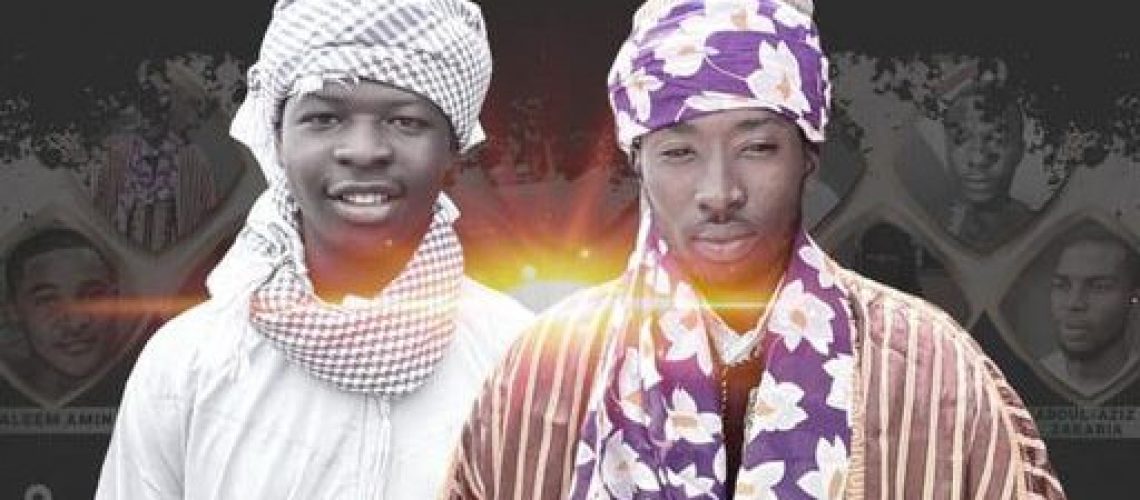
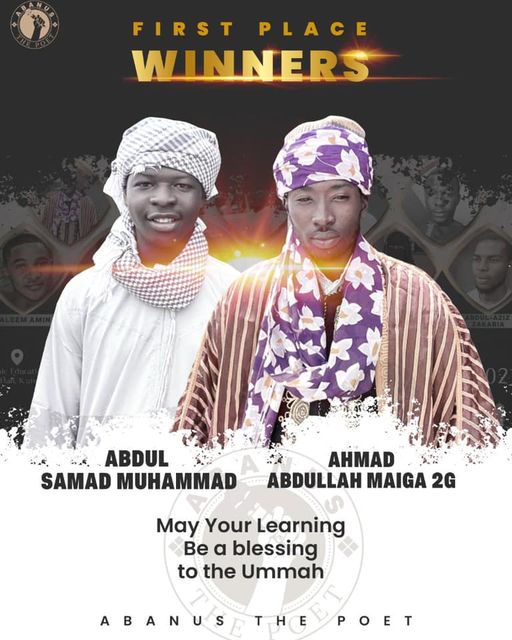
When all was set and done, two people emerged as winners of their respective groups in the contest. These champions are Ahmad Abdullah Dawud and Abdul Samed Mohammed Salis. Let’s get to know who these champions are, as they may inspire us all.
Ahmad Abdullah Dawud
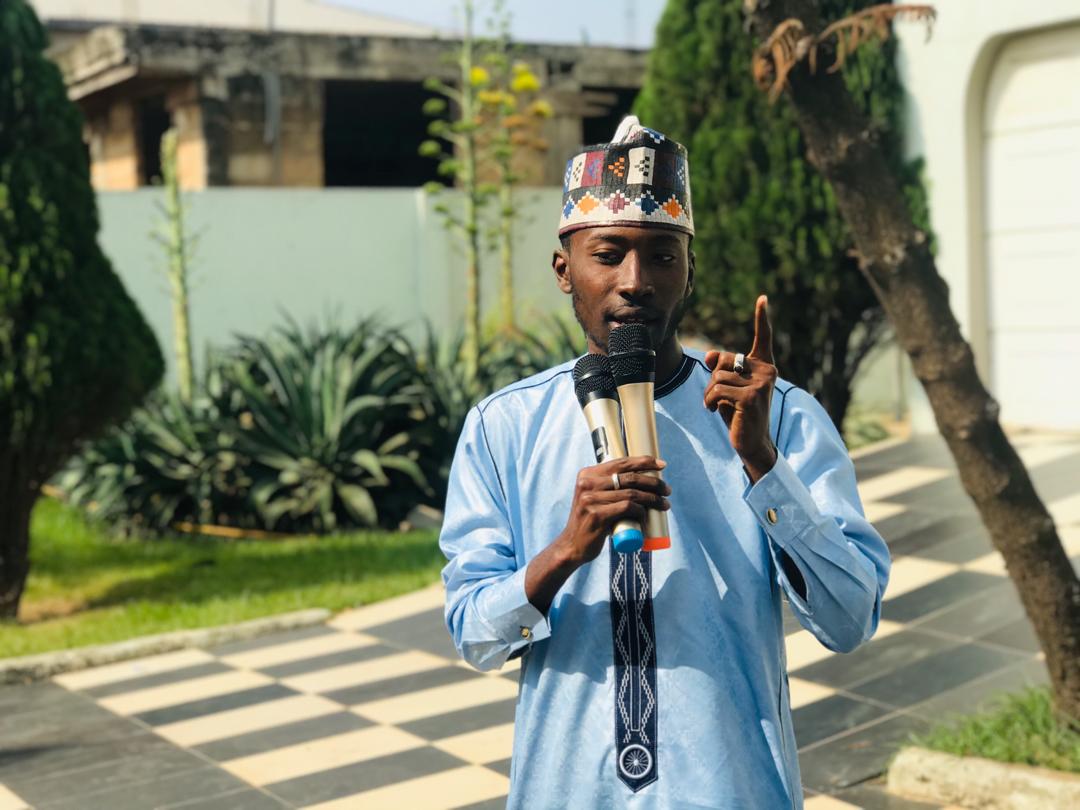
Ahmad, also known as Maiga, is from a family of 7 with three sisters and a brother. He lives at Sawaba in Kumasi. He is born of Mrs. Ayisha Muhammad and Mr. Abdullah Dawud. He attended preparatory school at Kalistus Ike International School and left at stage 3 to go and continue his basic education at the Institute of Islamic Studies, Airport Round-About, Kumasi. He completed his Arabis Senior High School education in the same school in 2016.
According to Maiga, his interest in Arabic poetry was first piqued in JHS 1 when he heard it from his Arabic teacher even though he did not understand it. Fast forward to 2014, he saw a trending video of his mentor now, Shaikh Abdul Nasir Alhassan who had won a poetry competition in Saudi Arabia. He decided to inch close to him and learn from him the art of poetry by first memorizing Shaikh Abdul Nasir’s poems.
He has at the back of his head, 350 lines of Arabic poetry. Below are some of the poets whose poems he has memorized:
- Shaikh Abdul Nasir
- Ahmad bun Hussain Mutanabbi
- Zuhair Ibn Abi Sulma
- Abul Alaa Al’ma’ari
- Muhammed Hafiz Ibrahim
- Muhammad Abdul Bari
- Muhammad Al’mahaddi
- Farazadaq
- Albuusairi
- Abul Baqaa Sualih bun Yazeed Arrundi
- Ka’ab bun Zuhair
- Abu Is’haaq Albeeri
- Muhammad Athabeeti
- Ibnu Rumiy
- Abul Ataahiya
- Laamiya Ibn Tamiya
Maiga has said that memorizing poetry in Arabic is a daunting task for him. And he almost commits all of his time to it. And at some point, he needs to revise and revise again as he forgets some of the poems he memorized. Asked whether he has ever thought of giving up, he said:
“I always encourage myself anytime my Mallam sends in a new poem by saying, ‘Maiga go there you can do it.'”
Maiga speaking on refusing to give up.
He said he dreams to someday write his own Arabic poems. And because there are strict rules on writing Arabic poems, he is now acquainting himself with rules with help of his mentor, Mallam Abdul Nasir.
Maiga dreams to become a Muslim scholar with the all-around authority of Islamic jurisprudence.
Asked what his advice would be, to young people who want to get into Arabic poetry, Maiga said:
“Belief is the first key to success. And also sincerity in all one does. And if you pray always, you will make a difference.”
Maiga encouraging young people.
Abdul Samed Mohammed Salis
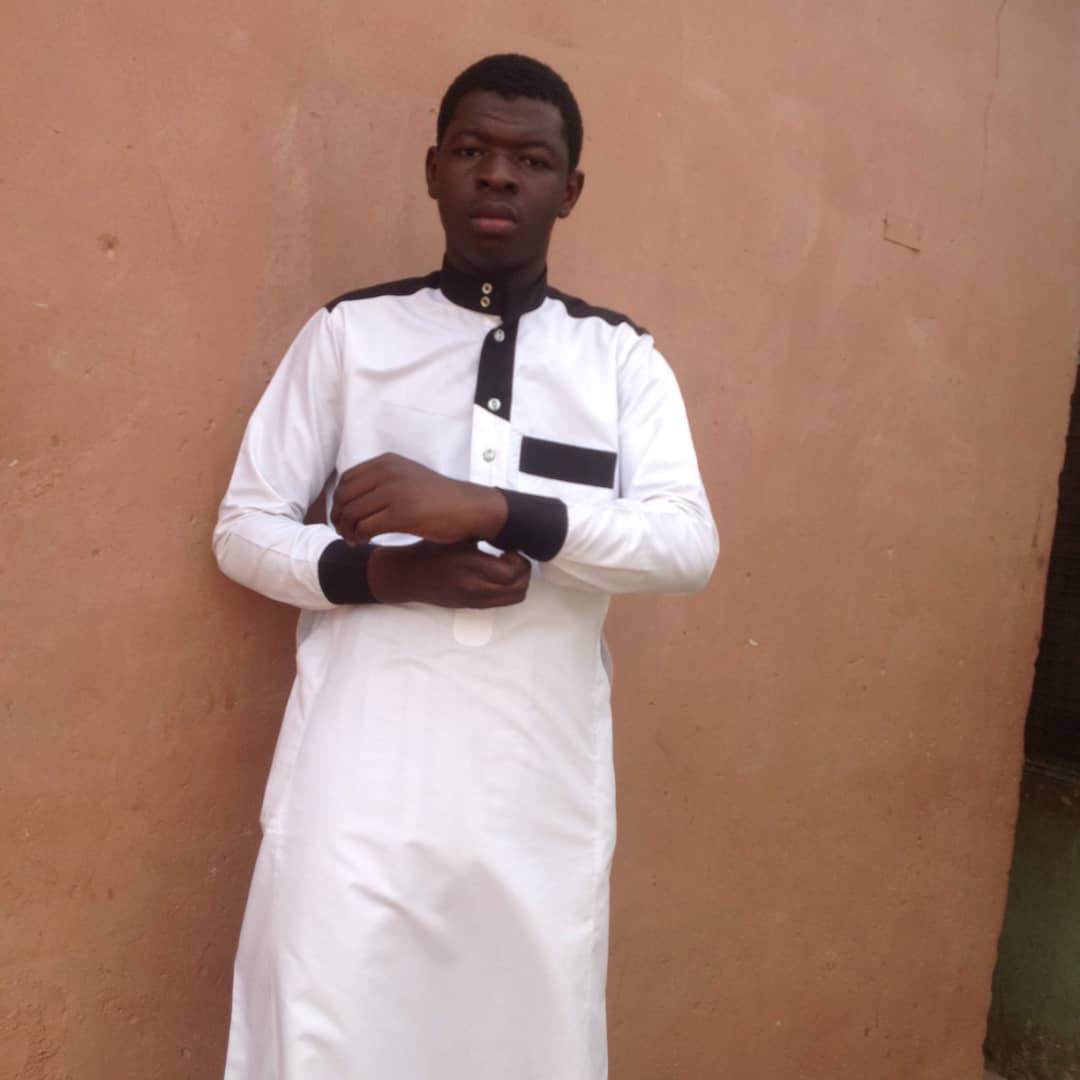
Abdul Samed is 19 years old with four siblings from the same mother and eight from the same father. He hails from Ejisu but is in Kumasi currently studying with three of his siblings. Also, he attended basic school at Ejisu Islamic School where he had both Arabic and English education. He furthered his education at Darul Hadith Institute for Islamic Studies where he attended Junior High School. Then he completed his secondary education at Islamic Senior High School and Nuriya Islamic School for his English and Arabic studies respectively.
Samad’s interest in poetry was whetted while he was studying at Daarul Hadeeth. He attended the weekly Qurani exegesis done by Mohammed Amin Hussein who cites a lot of poems in his teachings. He has been memorizing Arabic poems since then. So far, Abdul Samed says he has memorized over 300 lines of poetry from poets such as:
- Mohammed Al Mahadiy
- Mohammed Hafiz Ibrahim
- Al Mutanabiy
- Zuhair bun Abi Salmaa
- Ka’ab bun Zuhair (RA)
- Abu Ataahiya
- Abdul Nasir Alhassan
- Mohammed bun Mani’ullah Al Thabeety
- Abul Alaa Al Ma’ariy
- Ibnur Rumiy
- Ibn Maalik
- Farazdaq
- Ali bun Abii Taalib
- Muhammad bun Iwaad
- Albuusairi
- Albeeriy
- Muhammad Abul Bari
Abdul Samed said he has started making the effort to write his own Arabic poems and is hoping to publish his works someday. According to him, memorizing poems is not a difficult task for him as his passion drives him to achieve more in the art of poetry. He usually does his memorization from 1 to 3 AM and revises his memorized poems during the day. Samed believes that his memorization of the Quran has helped him greatly in the memorization of poems.
Abdul Samed says he aspires to hold a Ph.D. in Arabic Language. And an authority on the exegesis of the Holy Quran. Advising young people interested in Arabic poetry, Abdul samed said:
“Always believe in yourself. Do not underrate yourself. Go for what you want not what others want for you. Lastly, always pray in all things. Trust in Allah and you will make it,”
Abdul Samed inspiring younger people interested in Arabic poetry.
We wish our poetry champions, all the best. May they achieved great heights. And may they be a blessing and a source of peace for humanity.